Can Dermal Fillers Migrate and How Can You Prevent It?
Dermal fillers restore volume, soften lines and refine features such as the lips and cheeks. Treatments are quick, which is one reason they have become so popular in Canada. A frequent question, however, is whether filler can move after it has been injected.
Migration means that the product shifts from where it was placed and appears in an area where it was not intended. It is different from normal integration: all fillers spread slightly into the tissue, which is expected. Migration is when the product moves beyond its intended zone. It can happen, but it is uncommon, and understanding the causes and early signs helps patients and injectors keep results smooth.
What Is Filler Migration?
Filler migration is the displacement of product away from the injection site. The most common example is lip filler that moves above the vermilion border, creating a “shelf” or a blurred lip line. Migration can appear weeks, months or sometimes years after treatment. It mainly concerns hyaluronic acid (HA) fillers, the most widely used type, but any filler can be affected if the injection technique or volume is not appropriate.
Common Causes of Filler Migration
- Treatments too close together, before the previous product has settled.
- Too much product injected in one session or accumulated over repeated sessions.
- Injection plane or technique not suited to the area or the product.
- A product whose properties do not match the zone, for example a very soft gel in an area that needs structure, or the reverse.
- Pressure and muscle movement, especially around the mouth, which moves constantly.
- Massage or manipulation of the area soon after treatment.
Areas Most Prone to Migration
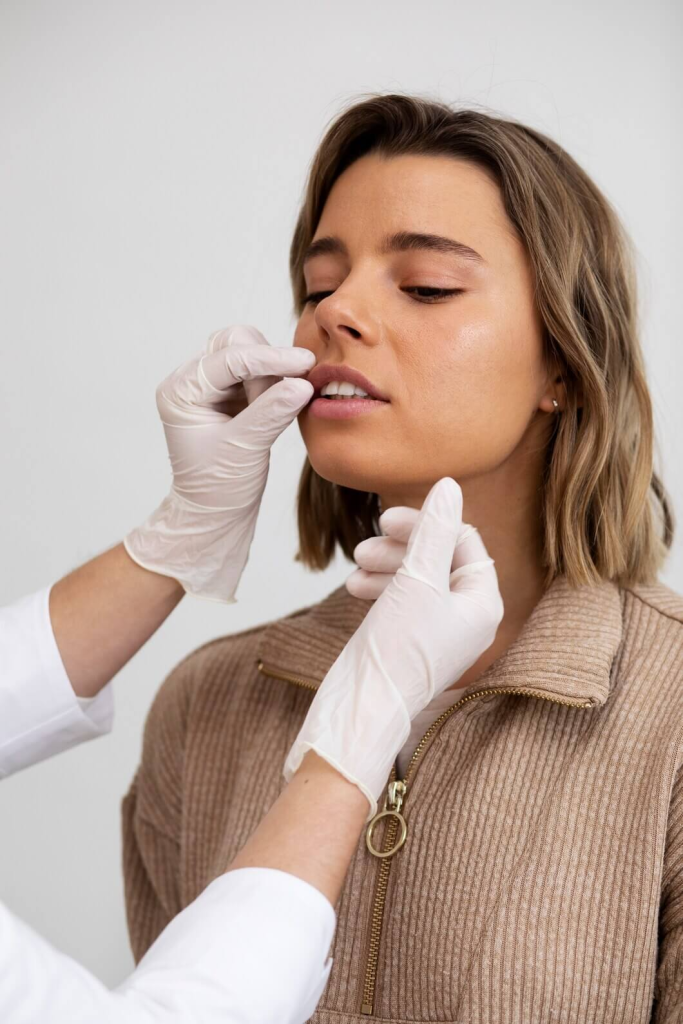
- Lips, particularly the upper lip and the border.
- Tear troughs, where the skin is thin and the area is very mobile.
- Nasolabial folds, influenced by facial expressions.
- Forehead and temples, when the product is injected superficially.
Our article on tear trough filler explains why this area requires an experienced injector.
How to Spot the Signs of Migrated Filler
- A blurred or puffy lip border, or a visible ridge above the lip.
- Lumps or fullness in an area that was not treated.
- Puffiness under the eyes that persists well after the swelling period.
- A change in the shape of the result over time.
Swelling after treatment is normal and settles within one to two weeks. Changes that appear or persist beyond that period should be assessed by the injector.
How to Prevent Filler Migration
For injectors:
- Choose a product whose rheology suits the area. HA fillers in Canada include ranges from JUVÉDERM®, RESTYLANE®, BELOTERO®, TEOSYAL® and REVANESSE®, each with products designed for specific zones.
- Use conservative volumes and build results over several sessions if needed.
- Respect the right injection depth and plane.
- Assess previous treatments before adding more product.
For patients:
Choose a qualified injector. In Canada, who may inject dermal fillers depends on the province and the professional college.
Avoid touching, massaging or pressing the area for a few days unless advised otherwise.
Avoid intense exercise, saunas and facial treatments for 24 to 48 hours.
What to Do If You Suspect Filler Migration

If you think your filler has moved, don’t panic. There are solutions. Hyaluronic acid fillers can be dissolved with an enzyme called hyaluronidase. This resets the area and allows you to start again, fresh. People sometimes ask, do dermal fillers dissolve naturally on their own. They don’t, but in skilled hands, they can be broken down quickly and safely.
If the migration is subtle, sometimes it can be balanced with careful adjustments. But often, dissolving and restarting is the cleaner fix. The important thing is to see your original injector or another qualified professional. DIY fixes or waiting it out usually just cause more stress.
References
Bell, T., & Kelso, C. (2022). Hyaluronic acid filler longevity, migration, diagnosis and implications. Journal of Aesthetic Nursing, Supplement 1, MA Healthcare Ltd. Retrieved August 28, 2025, from https://traceybell.co.uk/wp-content/uploads/2022/08/Tracey-Bell-Longevity-and-migration-published-article.pdf
Cosmetic Laser Centers. (2024, December 8). Can dermal fillers migrate? Learn the facts. Retrieved August 28, 2025, from https://www.cosmeticlasercenters.com/2024/12/09/can-dermal-fillers-migrate/
La Trenta. (2025, August 13). Is filler migration preventable? A corrective guide. Retrieved August 28, 2025, from https://www.latrenta.com/blog/is-filler-migration-preventable-a-corrective-guide