What Causes Bruising After an Injection and How Can You Prevent It?
Bruising is one of the most common side effects after an aesthetic or medical injection. It is usually harmless and temporary, but it can be bothersome when it is visible on the face. Understanding why it happens helps patients and injectors reduce the risk and speed up recovery.
What Causes Bruising After an Injection
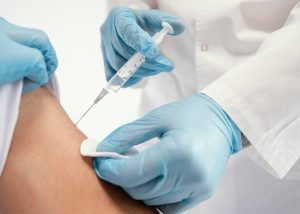
A bruise forms when a needle or cannula touches a small blood vessel under the skin. Blood escapes into the surrounding tissue and becomes visible as a blue, purple, then green or yellow mark as the body reabsorbs it. Factors that influence bruising include:
- The area treated: the lips, tear troughs and areas with thin skin or many blood vessels bruise more easily.
- The technique: the number of punctures, injection speed and pressure all play a role.
- The instrument: needles are more likely than blunt cannulas to injure small vessels.
- The patient: medications, supplements, alcohol and individual fragility of the vessels.
Who Is More Likely to Bruise

- People taking anticoagulants, antiplatelet drugs or anti-inflammatory drugs.
- People taking supplements such as fish oil, vitamin E, ginkgo or garlic.
- People who drank alcohol in the 24 to 48 hours before the injection.
- Older patients and people with thin or sun-damaged skin.
- People with a bleeding disorder.
How to Prevent Bruising After an Injection
For patients:
- If your physician agrees, stop supplements that increase bleeding about one week before.
- Never stop a prescribed anticoagulant without medical advice.
- Avoid alcohol for 24 to 48 hours before and after.
- Avoid intense exercise just before and after the appointment.
- Apply a cold compress right after the injection.
For injectors:
- Limit the number of entry points.
- Inject slowly, with low pressure.
- Apply gentle pressure after each injection when appropriate.
- Consider a cannula in areas prone to bruising.
See our guide on how to prepare for dermal filler treatments.
Best Practices for Faster Recovery
- Apply cold compresses wrapped in a cloth during the first 48 hours.
- Sleep with your head slightly elevated.
- Avoid heat, saunas and intense exercise for 48 hours.
- Cover the bruise with makeup once the injection points have closed, usually after 12 to 24 hours.
- Some patients use topical arnica, although the evidence is limited.
Most bruises fade within one to two weeks. See our article on reducing swelling and bruising after fillers.
When to Consider a Cannula

A cannula is a blunt-tipped instrument that pushes blood vessels aside rather than piercing them, which can reduce bruising. It also allows a large area to be treated from a single entry point. It is often used for the tear troughs, cheeks and lower face. The choice between needle and cannula depends on the area, the product and the injector’s experience. See our article on HA filler injection techniques. Clinics can find all products in our dermal fillers category.
References (APA)
Balci Akpinar, R., & Celebioglu, A. (2008). Effect of injection duration on bruising associated with subcutaneous heparin: A quasi experimental within-subject design. International Journal of Nursing Studies, 45(6), 812-817.
Gaertner, K., Baumgartner, S., & Walach, H. (2021). Is homeopathic arnica effective for postoperative recovery? A meta-analysis of placebo-controlled and active comparator trials. Frontiers in Surgery, 8, 680930.
Glogau, R. G., & Kane, M. A. C. (2008). Effect of injection techniques on the rate of local adverse events in patients implanted with nonanimal hyaluronic acid gel dermal fillers. Dermatologic Surgery, 34(s1), S105-S109.
King, M. (2017). The management of bruising following nonsurgical cosmetic treatment. Journal of Clinical and Aesthetic Dermatology, 10(2), E1-E4.
Leu, S., Havey, J., White, L. E., Martin, I., Yoo, S., Rademaker, A. W., & Alam, M. (2010). Accelerated resolution of laser-induced bruising with topical 20% arnica: A rater-blinded randomized controlled trial. British Journal of Dermatology, 163(3), 557-563.
Nestor, M. S., Ablon, G. R., & Stillman, M. A. (2010). The use of a contact cooling device to reduce pain and ecchymosis associated with dermal filler injections. Journal of Clinical and Aesthetic Dermatology, 3(3), 29-34.
Niamtu, J. (2009). Filler injection with micro-cannula instead of needles. Dermatologic Surgery, 35(12), 2005-2008.