What Are Dermal Fillers Made Of and Are They Safe?
Before receiving a dermal filler, many patients want to know exactly what is being injected under their skin. The answer depends on the type of filler: most are made of hyaluronic acid, a substance the body already produces, while others are designed to stimulate collagen. Understanding their composition helps patients feel confident and make informed choices.
Understanding Dermal Fillers
Dermal fillers are sterile injectable gels used to restore volume, smooth lines, refine contours or improve skin quality. In Canada, they are regulated as medical devices and must be injected by authorized professionals. Their behaviour in the skin, their duration and their reversibility depend on their main ingredient.
Main Ingredients in Dermal Fillers
<h3>Hyaluronic Acid (HA) Fillers</h3>
Hyaluronic acid is naturally present in the skin, where it retains water and provides hydration and volume. In fillers, it is produced by bacterial fermentation, then cross-linked to make it last longer. Many HA fillers also contain lidocaine, a local anaesthetic, for comfort. HA fillers are biodegradable and can be dissolved with hyaluronidase. Examples include JUVÉDERM®, RESTYLANE®, BELOTERO®, TEOSYAL®, REVANESSE®, STYLAGE® and SAYPHA®.
<h3>Calcium Hydroxylapatite (CaHA) Fillers</h3>
CaHA is a mineral similar to a component of bone. In fillers such as RADIESSE®, it takes the form of microspheres suspended in a gel carrier. The gel provides immediate volume, then is absorbed while the microspheres stimulate collagen. CaHA is biodegradable but cannot be dissolved with hyaluronidase.
<h3>Poly-L-Lactic Acid (PLLA) Fillers</h3>
PLLA is a biocompatible, biodegradable synthetic polymer, long used in medicine, for example in absorbable sutures. In SCULPTRA®, it is supplied as a powder reconstituted before injection, and it gradually stimulates collagen production.
<h3>Polymethylmethacrylate (PMMA) Fillers</h3>
PMMA is a non-biodegradable synthetic material. PMMA fillers contain microspheres that remain permanently in the tissue. Because they cannot be removed easily, they are much less commonly used.
How Dermal Fillers Are Made
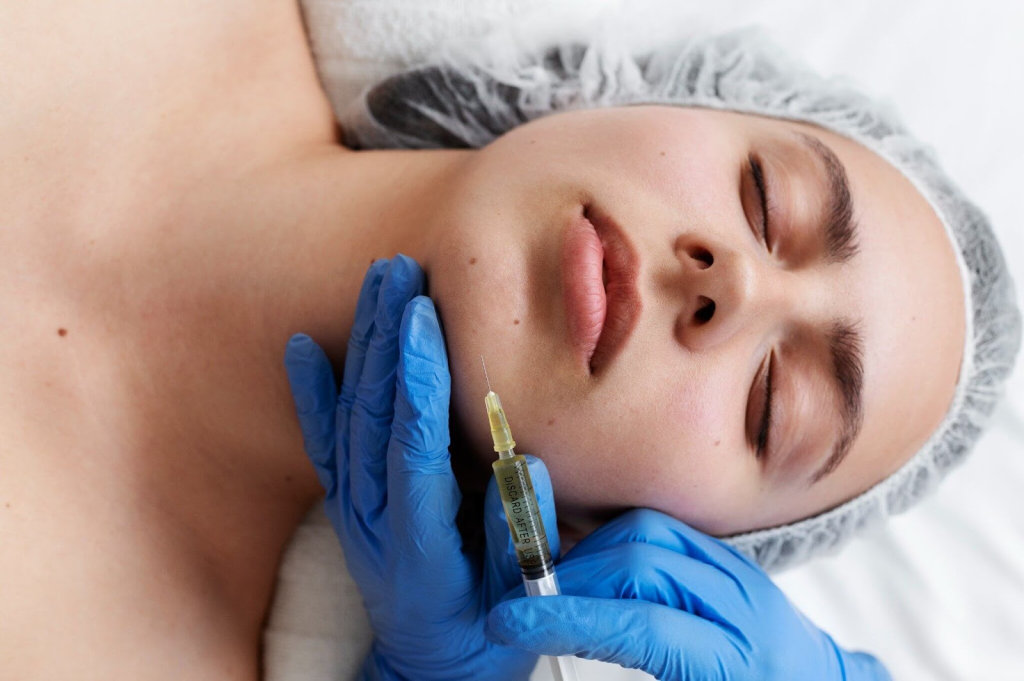
HA fillers are made from purified hyaluronic acid, cross-linked with an agent (often BDDE) whose residues are then removed, and adjusted to obtain the desired firmness and texture. The gel is sterilized and filled into syringes under controlled conditions. Each manufacturer uses its own technology, which explains the differences in texture, flexibility and duration between products.
Are Dermal Fillers Safe?
When obtained from legitimate sources and injected by qualified professionals, dermal fillers have a good safety record. The most common reactions are mild and temporary: swelling, redness and bruising. Rare complications, such as vascular occlusion, infection or delayed nodules, require experienced management. In Canada, any suspected adverse reaction can be reported to Health Canada through the Canada Vigilance Program. See our article on dermal filler risks and side effects.
Factors That Influence Safety and Results

- The injector’s training and experience. In Canada, who may inject fillers depends on the province and the professional college.
- The origin of the product: purchased through legitimate supply channels, with traceable lot numbers.
- The choice of product suited to the area and depth.
- The patient’s medical history and allergies.
- Aftercare and follow-up.
Choosing the Right Dermal Filler
The right filler depends on the goal: reversible volume, structure, collagen stimulation or skin quality. A consultation with a qualified injector helps choose the most suitable product. See our article on types of dermal fillers. Clinics can find all products in our dermal fillers category.
References
Chen, W., Wu, Y., & Liu, P. (2023). Injectable fillers: Current status, physicochemical properties, function, and perspectives. International Journal of Biological Macromolecules, 248, 123207. https://doi.org/10.1016/j.ijbiomac.2023.123207
De Boulle, K., & Heydenrych, I. (2020). Evaluating hyaluronic acid dermal fillers: A critique of current literature. Dermatologic Therapy, 33(4), e13643. https://doi.org/10.1111/dth.13643
Retrieved August 28, 2025, from https://pmc.ncbi.nlm.nih.gov/articles/PMC9285697/
Robertson, S. (2022, December 29). Dermal fillers. News-Medical. Retrieved August 28, 2025, from https://www.news-medical.net/health/Dermal-Fillers.aspx
American Society for Dermatologic Surgery (ASDS). (2022). Are dermal fillers safe? Retrieved August 28, 2025, from https://www.asds.net/asdsa-advocacy/advocacy-activities/news-you-can-use/are-dermal-filler-injections-safe