Are Orthopedic Injections the Best Option for Shoulder Pain?
The shoulder is the most mobile joint in the body, which also makes it vulnerable. Rotator cuff problems, bursitis, frozen shoulder and osteoarthritis can make it painful to reach a shelf, get dressed, shovel snow or sleep on one side. When pain persists despite rest and physiotherapy, an injection can help. Whether it is the best option depends on the diagnosis.
Understanding Shoulder Orthopedic Injections
Shoulder injections can target several areas: the glenohumeral joint (the main shoulder joint), the subacromial space under the acromion, the acromioclavicular joint at the top of the shoulder, or the tendon of the biceps. The main products are:
- Corticosteroids, to calm inflammation quickly.
- Hyaluronic acid viscosupplements, to improve lubrication in glenohumeral osteoarthritis, when the product’s instructions for use include the shoulder.
- Platelet-rich plasma (PRP), studied for some tendon conditions.
- Hydrodilatation, an injection of a larger volume of fluid, sometimes used for frozen shoulder.
When Are Shoulder Injections Recommended?

- Subacromial bursitis or rotator cuff tendinopathy that limits movement and sleep.
- Adhesive capsulitis (frozen shoulder), especially in the painful early phase.
- Glenohumeral or acromioclavicular osteoarthritis.
- To confirm the source of pain before considering other treatments.
How Do Shoulder Injections Work?
Corticosteroids reduce inflammation in the bursa, around the tendons or in the joint, which relieves pain and makes it easier to move. Viscosupplements improve the quality of joint fluid in an osteoarthritic shoulder. In all cases, the relief obtained creates a window for physiotherapy, which is essential to restore strength and range of motion. Ultrasound guidance improves accuracy, particularly for the glenohumeral joint. See our article on orthopedic injection techniques.
Are Shoulder Injections the Best Option?
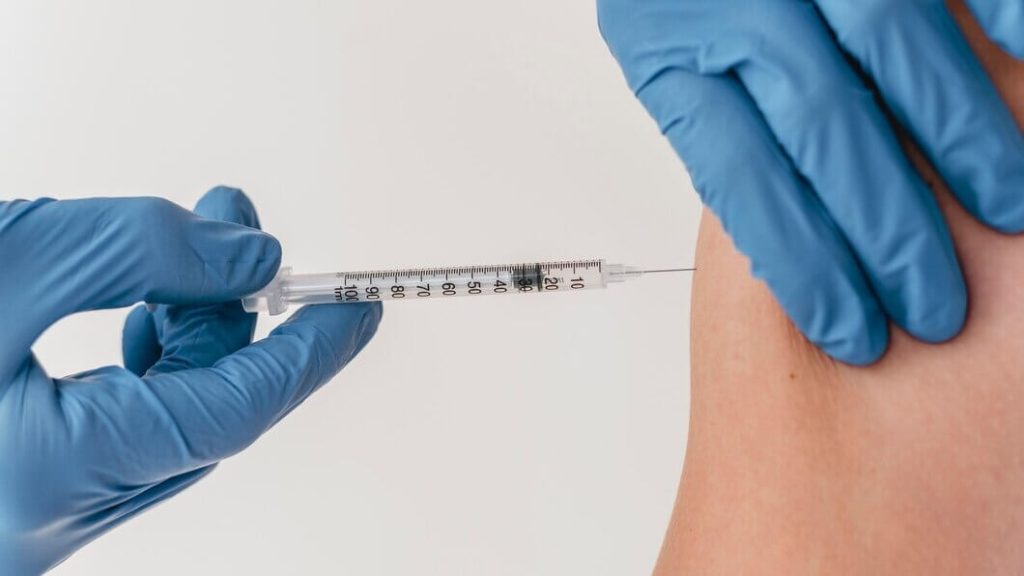
For many patients, injections are an effective step, but rarely a treatment on their own. For bursitis and tendinopathy, corticosteroids often provide good short-term relief, and the result lasts longer when combined with exercises. For frozen shoulder, an early injection can reduce pain and speed recovery. For osteoarthritis, viscosupplements may help some patients. For a complete rotator cuff tear in an active patient, surgical repair may be more appropriate. The best option is the one that matches the diagnosis, confirmed by examination and often by ultrasound or MRI.
Benefits and Limitations
Benefits: quick relief, a minimally invasive procedure, a faster return to physiotherapy and daily activities, and a diagnostic role.
Limitations: temporary effect, repeated corticosteroid injections into tendons must be avoided, and injections do not repair a torn tendon. Rare risks include infection and allergic reactions. See our article on orthopedic injection side effects.
What to Expect Before, During and After the Procedure
Before: the clinician examines the shoulder, reviews imaging and checks medications and allergies. See our guide to preparing for an orthopedic injection.
During: the patient is seated or lying down, the skin is disinfected and the injection is performed, often under ultrasound guidance. It takes a few minutes.
After: avoid lifting heavy loads and overhead movements for 24 to 48 hours, apply ice if needed, then resume gentle exercises as advised.
Combining Injections With Other Therapies
- Physiotherapy to restore range of motion and strengthen the rotator cuff and shoulder blade muscles.
- A home exercise program, done regularly.
- Activity modification, such as adjusting work posture or technique in sports like tennis, swimming or hockey.
- Gradual return to demanding tasks, such as shovelling snow, which places heavy loads on the shoulder.
Clinics can compare viscosupplements and combination products in our orthopedic injections category.
References
- Alshahir, N., et al. (2025). Comparative efficacy of platelet-rich plasma and corticosteroid injections for rotator cuff tendinopathy: A systematic review and meta-analysis. Orthopedic Reviews. https://orthopedicreviews.openmedicalpublishing.org/article/143581-comparative-efficacy-of-platelet-rich-plasma-and-corticostero
- Wang, W., et al. (2017). Effectiveness of corticosteroid injections in adhesive capsulitis of shoulder: A systematic review and meta-analysis. Archives of Physical Medicine and Rehabilitation. https://pubmed.ncbi.nlm.nih.gov/28700506/
- Gaujoux-Viala, C., et al. (2009). Efficacy and safety of steroid injections for shoulder and elbow tendonitis: A meta-analysis of randomised controlled trials. Annals of the Rheumatic Diseases. https://www.sciencedirect.com/science/article/pii/S0003496724215661
- Mihata, T., et al. (2025). Effectiveness of additional or standalone corticosteroid injections compared with physical therapist interventions for shoulder pain: A systematic review. Physical Therapy. https://academic.oup.com/ptj/advance-article-abstract/doi/10.1093/ptj/pzaf006/7965788
- Buchbinder, R., et al. (2003). Corticosteroid injections for shoulder pain. Cochrane Database of Systematic Reviews, (1), CD000016. https://pmc.ncbi.nlm.nih.gov/articles/PMC6464922/