Polynucleotides Skin Rejuvenation: Mechanism, Benefits, and Clinical Insights
TL;DR: Polynucleotides promote skin rejuvenation by enhancing cellular repair, hydration, and tissue regeneration, providing long-lasting aesthetic benefits.
Understanding polynucleotides skin rejuvenation: mechanism and benefits starts with knowing they work differently than most skin treatments you’ve heard about. Instead of just filling wrinkles or sitting on top of your skin, this approach gets your cells to do the heavy lifting. You’re basically looking at three things: real cellular repair, skin that keeps regenerating on its own, and results that actually stick around. The whole evaluation takes maybe 10 minutes once you know what matters.
Here’s the thing about polynucleotide treatments. They don’t work like traditional options, which show immediate results. Your body needs time to respond because you’re activating natural processes that might’ve slowed down. Think of it as waking up systems that were already there but just got lazy over time. Everything below walks through how this actually happens and what changes you’ll notice.
Why does any of this matter for your skin? Because the decisions you make now affect how you’ll look years down the road. Going the biostimulator route means you’re protecting what your skin already has instead of just covering problems with temporary fixes. Most people rush straight to visible changes. The smarter play is building tissue quality first. Just keep things simple and focus on treatments that actually make your skin healthier with each session.
What Are Polynucleotides?
Think of polynucleotides as little messengers made from DNA chains. These come from purified natural sources and tell your skin cells to start fixing things. When your natural repair processes slow down over the years, these molecules step in to get them going again.
Here’s where they’re different from regular fillers. Most fillers just pump volume into your skin to fill out lines and hollow spots. Polynucleotides don’t work that way. Instead of adding bulk, they flip switches in your existing cells so your skin makes what it needs.
Most formulations use salmon DNA because it’s surprisingly similar to human DNA. The extraction process cleans it multiple times to remove proteins and other impurities that might cause reactions. What’s left is pure DNA fragments ready to talk to your cells.
Mechanism of Action
The whole process kicks off through signals that wake up skin functions you forgot you had. Once injected, polynucleotides bind to specific sites on your fibroblast cells. These fibroblasts are the workers making your collagen and elastin. When they get the signal, they crank up production.
Getting those fibroblasts activated is the secret sauce here. They don’t just randomly pump out collagen everywhere. They specifically make type I collagen, the exact structural protein your skin had tons of when you were younger.
This collagen and elastin boost doesn’t happen overnight, though. It builds up gradually over a few weeks. Your body reads the polynucleotides like a repair request that needs attention. Research shows collagen production can jump by almost 50% in just three weeks.
There’s also this whole thing with your extracellular matrix getting stronger. That’s the scaffolding between your cells, holding everything together. When that scaffold gets reinforced, your skin hangs onto moisture better, and nutrients flow where they need to go.
Better hydration comes from two places at once. First, the polynucleotides directly pull in water molecules. Second, your activated fibroblasts start making more hyaluronic acid on their own. Between both, your skin grabs onto moisture way more effectively than before.
Key Benefits for Skin Rejuvenation
Better elasticity and firmness tend to be the first things people notice. Press on your skin and it actually springs back instead of just staying dented. New elastin fibers are rebuilding the bounce your skin used to have. The change creeps up on you but feels totally natural.
Fine lines and wrinkles start to fade as you regain volume at the cellular level. As your dermis thickens with fresh collagen, those shallow lines fill in from below. Even deeper lines from expressions soften up as everything around them gets more support. You’ll see the smoothing happen over several weeks.
That hydrated glow everyone wants comes from your skin actually holding water better. When your skin’s properly moisturized, light bounces off it more evenly. That’s what gives you that fresh look people associate with being healthy. The glow develops from the inside out.
Your overall skin health gets a boost beyond just looking better, too. The antioxidant stuff helps fight the free radicals that damage your cells every day. Less inflammation means your repair systems aren’t constantly stressed. Everything just functions better.
If you’re curious about mixing approaches, HA filler combination treatments: lips, cheeks, under-eye can work alongside this pretty well. Polynucleotides rebuild tissue quality while fillers tackle specific volume issues.
Treatment Areas and Protocols
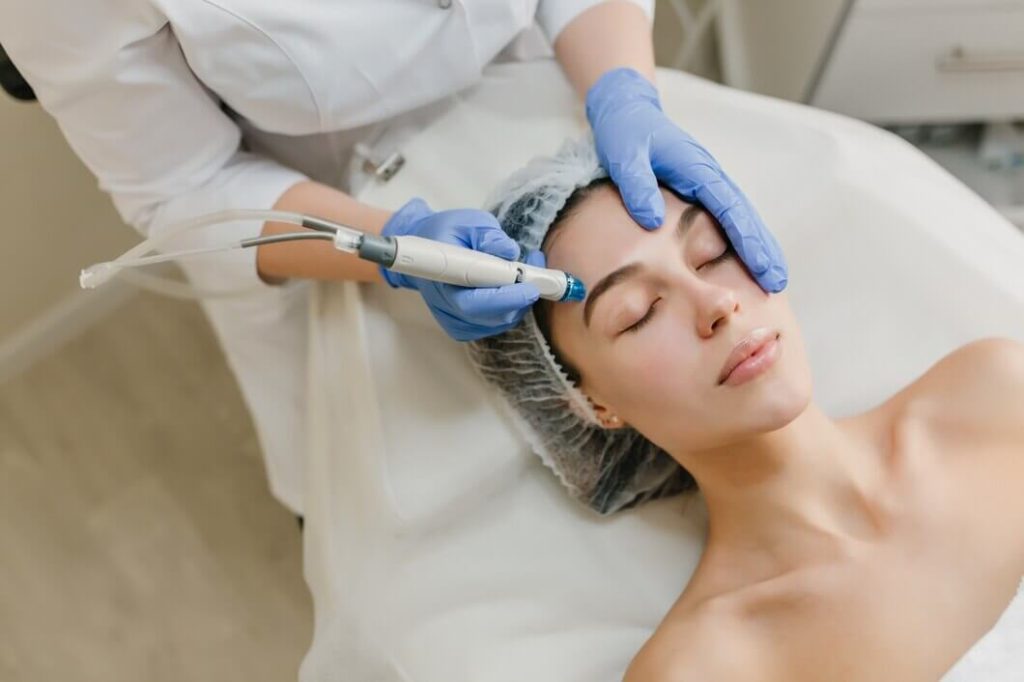
Face treatments hit several zones depending on what bothers you most. Cheeks get better volume and lift as more collagen shows up. The under-eye area loses its hollowed-out look, and the skin thickens. Dark circles become less obvious. Your jawline gets more defined as everything tightens up.
The neck and chest areas respond really well because the skin there is thin and ages quickly. Treatments smooth out horizontal neck lines and improve texture. People skip these areas a lot, but they make a bigger difference than you’d think.
Most protocols run three sessions spaced three weeks apart. That gives your cells time to respond before the next signal. Some practitioners go for four sessions if you’ve got more advanced concerns. After that, maintenance is done every 6 to 12 months.
How deep the injections go changes based on where you’re treating. Shallow injections work on the upper layers for texture. Deeper ones activate fibroblasts farther down to induce structural changes.
How long results stick around is partly related to HA filler longevity: factors affecting duration, though polynucleotides work differently. While fillers gradually break down, polynucleotide effects hang around because they get your tissue production going. Results typically last six to twelve months.
Safety Considerations and Best Practices
Clean injection technique keeps complications at bay and ensures you get good results. Practitioners properly prepare everything and use fresh needles at each injection site. The area is thoroughly cleaned before any product comes into contact with your skin. This attention to hygiene matters because even minor lapses can affect how well your skin responds to treatment.
Patient selection comes down to realistic expectations and decent health. This works best for people who want gradual improvements rather than dramatic overnight transformations. If you’ve got active skin infections or certain autoimmune issues, you might need to hold off. Your practitioner will review your medical history and current skin condition before moving forward with any treatment plan.
Checking in on results happens through follow-ups after each session. Your practitioner takes photos to track progress. These visits let them tweak the protocol if needed. Most people appreciate seeing the side-by-side comparisons because the changes happen slowly enough that you might not notice day to day.
Touch-ups keep your results going once you finish the initial series. Some folks come back every six months, while others wait the full year. How your skin responded to the first treatments tells you when to schedule maintenance. The beauty of this approach is that you’re not locked into a rigid schedule.
Glossary
- Polynucleotides: DNA molecule chains that basically send signals to your skin cells, telling them to kick repair and regeneration into gear.
- Fibroblast activation: Getting your fibroblast cells to ramp up production of collagen, elastin, and other proteins that keep your skin structure strong.
- Extracellular matrix: The network of proteins and stuff between your cells that holds everything together and lets cells talk to each other.
- Collagen stimulation: When your skin cells are triggered to produce more collagen, it leads to firmer, more resilient skin.
- Skin rejuvenation: Making your skin healthier, better-looking, and more functional through treatments that support the repair stuff your body already does naturally. This encompasses both cellular changes and visible cosmetic improvements.
References
Guarneri, F., et al. (2024). Polynucleotides in aesthetic medicine: A review of current evidence. PMC. https://pmc.ncbi.nlm.nih.gov/articles/PMC11311621/
New Face NY. (2025, August 11). Polynucleotides NYC. https://www.newfaceny.com/non-surgical/polynucleotides/
London Dermatology Centre. (2025, June 8). Polynucleotides in skin rejuvenation: The latest research. https://www.london-dermatology-centre.co.uk/blog/polynucleotides-latest-research/
DermaFocus. (2025, May 25). How polynucleotides communicate with skin cells. https://dermafocus.co.uk/the-science-of-cellular-repair/
Bunting, S. (2025, February 24). Polynucleotides: The next frontier in skin rejuvenation. https://us.drsambunting.com/blogs/sam-bunting/polynucleotides-the-next-frontier-in-skin-rejuvenation