Mesotherapy vs. Microneedling: Key Differences and Results
Skin health is something people talk about more and more. Not just creams or serums, but treatments that go a little deeper. Two names often come up in that discussion: mesotherapy and microneedling. Both are widely offered in clinics, both are used for skin rejuvenation, and both have a loyal following.
They are, however, very different in the way they work. One feeds the skin with nutrients directly. The other pushes the skin to repair and rebuild on its own. If you are comparing mesotherapy vs. microneedling, it helps to break down what each method does, what the results look like, and how to know which is a better fit. People also sometimes check mesotherapy side effects early in the research phase simply to understand what is normal after treatment.
There is also a lot of overlap in conversations about injection-based treatments in general. Some readers compare mesotherapy vs. dermal fillers because they want to understand why one treatment focuses on nourishment while the other focuses on volume. Others look up where to buy mesotherapy injections purely out of curiosity, to see what formulations are commonly used in clinics and how they are positioned in the professional market.
What Is Mesotherapy?
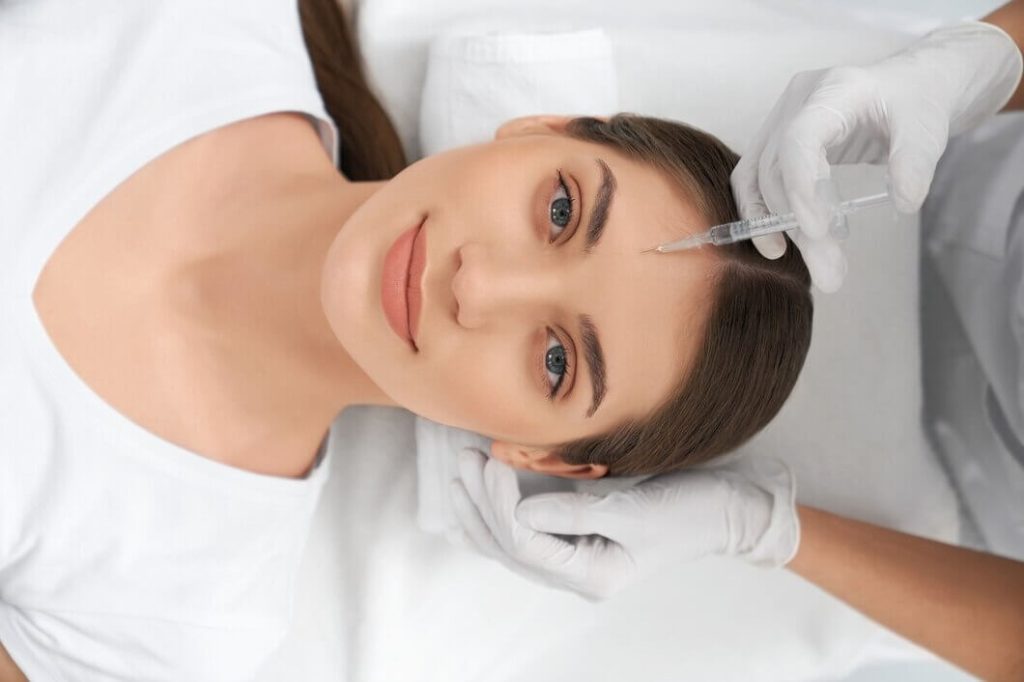
Mesotherapy started in medical practice decades ago and was later adapted for beauty treatments. The technique is straightforward: tiny injections are placed into the skin with a fine needle or a mesotherapy gun. What goes in is usually a blend of active ingredients, like vitamins, amino acids, minerals, or hyaluronic acid.
The purpose is direct delivery. Instead of relying on creams that mostly sit on the surface, these nutrients go into the middle layer of the skin where they can actually influence hydration, elasticity, and cellular activity.
Mesotherapy is versatile. Clinics may use it for the face, neck, chest, or even scalp. For some people, it’s about adding brightness to dull skin. For others, it’s about softening fine lines or improving elasticity. Certain formulas are also made for reducing puffiness under the eyes or softening a double chin.
So, mesotherapy is not a single product but rather a method of delivery. What goes in depends on the patient’s needs.
What Is Microneedling?
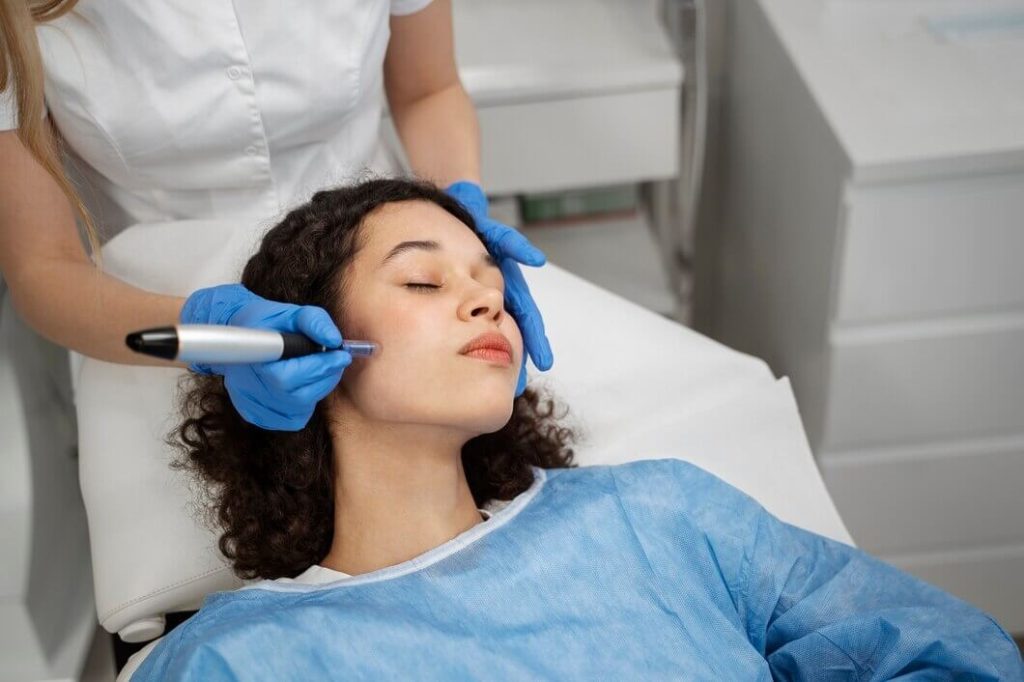
Microneedling is a different concept. No vitamins or minerals are injected. Instead, the treatment relies on controlled injury. A device with very fine needles, often a dermaroller or a pen-like machine, creates micro-channels in the skin.
Those tiny punctures signal the body to start repairing itself. In doing so, collagen and elastin are produced in higher amounts. These are the proteins that give skin its structure and bounce.
Microneedling is often chosen for acne scars, fine lines, uneven texture, or enlarged pores. The results are not instant, because the process depends on natural healing, but improvements build steadily. Many clinics also pair the procedure with serums, applying them during or right after needling. Because the channels are open, absorption is stronger than with regular topical use.
Mesotherapy vs. Microneedling – How They Work
To put it simply: mesotherapy feeds the skin. Microneedling challenges the skin.
Mesotherapy works by placing nutrients where they can be used directly. Hyaluronic acid hydrates, antioxidants brighten, and peptides encourage activity at a cellular level. The improvements are tied to what is injected.
Microneedling, in contrast, does not add anything. It stimulates a natural cycle. By causing very small injuries, it triggers a cascade of repair signals, leading to firmer, stronger skin over time.
For someone choosing, it comes down to goals. Hydration, glow, or pigmentation issues? Mesotherapy makes sense. Scars, lines, or loss of firmness? Microneedling is usually more effective. Some clinics combine the two. Needling first, mesotherapy right after, in order to cover both bases.
Key Benefits of Mesotherapy
Mesotherapy’s main strength is customisation. Each formula can be tailored. Common results include:
- Deep hydration, which makes the skin look fresher and feel plumper
- Better elasticity and firmness, useful for early signs of sagging
- More even tone, with reduced dullness or pigmentation spots
- Targeted contouring, such as treating under-eye bags or a soft jawline
- An overall glow that patients often describe as healthier-looking skin
Because the treatment delivers active substances directly, results can be seen quickly.
Key Benefits of Microneedling
Microneedling is not about adding nutrients but about reshaping. Its benefits are often described as structural:
- Stronger collagen and elastin production, helping with firmness. These proteins are the framework of the skin. As more is produced, the surface feels tighter, and fine lines can soften.
- Softer appearance of acne scars or surgical marks. By triggering repair beneath the surface, microneedling can gradually lift indented scars and make them blend more naturally into the surrounding skin.
- Smoother skin surface with refined pores. Enlarged pores become less noticeable as collagen builds around them, creating a more even texture over time.
- Better skin tone and more even texture. Uneven patches, roughness, or early signs of aging can be balanced out as the skin renews itself. The process doesn’t erase imperfections overnight, but steady improvement is common.
- Stronger uptake of serums applied during treatment. The micro-channels act like open doors, letting nourishing products seep deeper than they would on intact skin. This means hydration, brightening, or calming serums work harder after a session.
The improvements build slowly, but they tend to last longer because they come from the skin’s own repair system.
Results Comparison – What to Expect

Mesotherapy usually shows results after the first few sessions. Skin looks more hydrated, more even, sometimes brighter. The catch is that these results require maintenance. The nutrients injected eventually break down, and repeat sessions are needed every few months.
Microneedling takes more patience. Changes are gradual. Collagen production increases over weeks, sometimes months, and results can keep improving even after the last session. Many people see visible changes in scarring or firmness six months after completing their plan.
So mesotherapy delivers a fast, noticeable glow but requires regular upkeep. Microneedling builds more slowly but can hold results longer.
Which Treatment Is Right for You?
The answer depends on what you want from your skin. Mesotherapy often appeals to people chasing hydration and a fresher look. It’s also useful for uneven tone or pigmentation that creams don’t touch. Because it delivers nutrients directly, some patients prefer it to anything that relies on the body’s natural repair.
Microneedling speaks more to those worried about scars, lines, or skin that has lost firmness. The process is slower, but the gains in collagen and texture can last longer. Someone dealing with acne scars, for example, might notice steady changes months after the final session.
Some clinics don’t make patients choose at all. They combine the two: first microneedling, then mesotherapy, using the channels created by the needles to push the solution deeper.
Another thing to think about is commitment. Mesotherapy asks for regular top-ups. Microneedling holds longer between sessions. Both can work, but the right path depends on skin history, patience, and goals.
References
Ray Cochrane Aesthetics. (2025, August 3). Mesotherapy vs microneedling: What are the differences? Retrieved from https://www.raycochrane.co.uk/mesotherapy-vs-microneedling-what-are-the-differences-and-similarities/
EF Medispa. (2024, October 31). Mesotherapy vs microneedling: What is the difference? Retrieved from
https://www.efmedispa.com/insights/mesotherapy-vs-microneedling-what-is-the-difference
Cernova. (2025, January 20). Mesotherapy vs microneedling: The ultimate comparison. Retrieved from
https://cernova.co.uk/mesotherapy-vs-microneedling
Professional Beauty. (2025, March 27). The differences between mesotherapy and microneedling. Retrieved from