What are Biostimulators?
Biostimulators are not fillers in the usual sense. They don’t just sit in the skin to create instant bulk. Instead, they set off a reaction. The tissue responds by making more collagen, sometimes elastin too, and the changes build slowly. That’s why results look more like natural aging in reverse than like a sudden correction.
The substances behind them vary. PLLA, CaHA, PCL, and recombinant collagen. Each has its own history and handling. What they share is the ability to signal fibroblasts to get back to work. In the weeks after treatment, patients don’t notice a “filled line” so much as a gradual firming, a change in tone, and a better feel to the skin.
For practitioners, this means you’re not offering a quick fix but a longer story. Some products last two years or more. Some work best in the face, others in areas like the neck or chest where texture has thinned. They don’t replace hyaluronic acid fillers, but they fill a different role: building a foundation of stronger tissue that supports everything else you do.
How do Biostimulators Work?
Biostimulators contain particles or active compounds that serve as a signal for fibroblasts in the dermis. Once injected, the body recognizes these particles and begins laying down new collagen fibers around them. Depending on the material—poly-L-lactic acid (PLLA), calcium hydroxylapatite (CaHA), polycaprolactone (PCL), or recombinant collagen—the response can last from one to several years.
The effect is not instant. Patients typically notice changes after a few weeks, with improvements continuing as collagen matures. For clinicians, this offers flexibility: you can pair biostimulators with hyaluronic acid fillers for immediate lift, or use them alone for a regenerative approach.
Biostimulators for Face
When it comes to facial structure, patients usually want results that hold up over time without looking stiff. Radiesse is often the first choice here. It supports cheeks and jawlines right away, but the real value is in how it encourages the skin to rebuild itself.
- Radiesse® 1.5 ml: Used most often in the cheeks or along the jaw. Gives a lift you can see immediately, then keeps working in the background as collagen fibers form.
- Radiesse® 3 ml: A larger option for when more coverage is needed. Commonly used in the midface or broader contouring work, where stability is as important as shape.
Clinics rely on these because they solve two problems at once: restoring definition and setting the stage for longer-term improvement.
Biostimulators for Skin
Skin quality is harder to measure than volume, but patients notice it just as much. Fine crepiness, thinning, or dullness often bothers them even when the shape is still good. Biostimulators can be adapted to address that, especially diluted protocols or collagen-focused products.
- Radiesse® (+) 1.5 ml with Lidocaine: Used in diluted form to act more like a skin booster than a filler. Patients usually describe their skin as firmer and smoother a few weeks after treatment.
- Karisma RH Collagen SoftFiller Biorestutivo Face: A different approach, instead of relying on CaHA, it brings recombinant collagen. It helps fragile skin regain some of its strength and elasticity.
These two cover a lot of ground for clinics, whether the goal is overall tone, hydration, or dealing with early laxity.
Collagen Biostimulators
Some injectables are less about instant shape and more about what happens in the months that follow. These are chosen for their ability to keep skin building fresh collagen long after the appointment. They tend to appeal to patients who want changes that unfold gradually.
- Ellansé™ S: A lighter option in the PCL family. It nudges the skin toward better tone and firmness without a heavy-handed effect.
- Ellansé™ M: Stays active for longer and gives stronger support than Ellansé S. Often chosen when patients want more durable results.
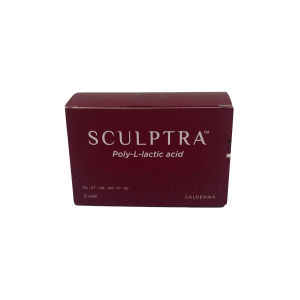
- Sculptra®: PLLA-based and well-known in the field. It builds volume slowly, session by session, and the results can hold for years.
- HArmonyCA™: Part hyaluronic acid for instant effect, part CaHA for later collagen stimulation. It answers the need for both quick correction and ongoing improvement.
These products remind both patients and practitioners that aesthetics doesn’t always have to be about instant gratification. Sometimes slower is better.
Biostimulators Treatment Areas
These products are versatile. In the face, they restore midface volume, smooth jawlines, and correct temple or chin hollowing. In skin-quality protocols, they reduce crepiness and fine lines on the neck and chest. Some formulations can be extended to arms, thighs, and buttocks when larger-scale collagen support is needed.
The choice of product depends on tissue type and patient goals. Firmer structures like jawline require durable scaffolds, while delicate skin areas respond better to softer or diluted preparations.
Biostimulators vs. Other Dermal Fillers
Traditional hyaluronic acid fillers remain one of the most widely used tools in aesthetic medicine. They provide shape and lift instantly, which is what most patients expect when they walk out of a treatment room. Another advantage is that they can be dissolved if needed, which gives both patient and practitioner a safety net. What they do not offer, however, is a change in the underlying tissue. The skin may look fuller, but the quality of the dermis itself remains the same.
Biostimulators take a very different path. Instead of filling space directly, they act as a trigger for the body’s own repair systems. Collagen is rebuilt, elastin production is encouraged, and the end result is tissue that functions more like it did years earlier. Because this process takes time, patients do not leave the clinic with a finished result. The improvement builds slowly, which can actually be an advantage for those who want subtle, progressive changes rather than a sudden transformation.
When compared with permanent fillers, biostimulators offer another layer of safety. Permanent materials can provide long-lasting volume but are difficult, if not impossible, to reverse. Complications in those cases are harder to manage. Biostimulators, on the other hand, gradually break down if not maintained. This gives both the injector and the patient more flexibility and control over outcomes.
Hyaluronic acid fillers are still the go-to for fast corrections, while biostimulators contribute to deeper, slower changes. When they are used together, one gives the immediate adjustment patients look for, and the other supports the skin over time. Many clinics rely on this balance because it offers both short-term improvement and longer-lasting stability.
Potential Side Effects
Like all injectable treatments, biostimulators carry some risks. Common short-term effects include redness, mild swelling, or bruising around the injection site. These usually resolve within days.
Because biostimulators stimulate a biological response, there is potential for small nodules or firmness under the skin. Careful technique and proper product placement minimize this. Rare but more serious complications include vascular events, which require immediate intervention. For this reason, clinics should always keep hyaluronidase and appropriate emergency protocols available.
Patient selection also matters. Clear medical history, assessment of skin quality, and proper aftercare guidance reduce the chance of complications.