Polynucleotides vs HA Fillers: Choosing the Right Treatment for Your Patients
TL;DR: Both polynucleotides and HA fillers offer unique benefits. Choosing the right option depends on patient goals, skin condition, treatment area, and longevity preferences.
Understanding polynucleotides vs HA fillers: choosing the right treatment equips you to match patients with the ideal solutions. When you know how to differentiate these options, you deliver three key outcomes: targeted results that fit goals, predictable outcomes, and cost-effective planning. You can evaluate which option suits your patient in about 10 minutes.
Clinical procurement usually involves ordering for multiple treatment plans or building protocols for repeat patients. Making smart choices means understanding how each product works, what visible changes to expect, which zones respond best, and when combinations make sense.
Your treatment selection directly impacts satisfaction and practice efficiency. Choosing the right modality protects against unrealistic expectations, reduces the need for corrective treatments, and avoids budget waste. The smart approach is matching the mechanism to the concern before defaulting to what’s familiar. Keep decision criteria simple and patient-centered.
Overview of HA Fillers and Polynucleotides
HA fillers are gel-like substances made from hyaluronic acid. This molecule naturally exists in your skin and binds water. When injected under the skin, these fillers physically take up space to add volume. Think of them as strategic cushions placed where you need lift.
The composition is straightforward. Cross-linked hyaluronic acid gets suspended in a gel carrier. The cross-linking determines how thick the product is and how long it lasts. Different formulas work for different depths and areas.
Polynucleotides take a different approach. These are DNA molecule chains extracted from salmon. Instead of adding volume, they signal your skin cells to produce more collagen and elastin. Your fibroblasts get a wake-up call to rebuild tissue.
How they work couldn’t be more different. HA fillers give instant support by physically occupying space. Results show up immediately. Polynucleotides activate biological pathways that take weeks to produce visible changes.
Common treatment areas overlap, but for different reasons. HA fillers excel at cheeks, lips, and jawlines where you need volume. Polynucleotides work great on the under-eyes, neck, and hands, where skin quality matters more.
Key Differences Between HA Fillers and Polynucleotides
Longevity patterns differ significantly. HA fillers typically last six to eighteen months, depending on the product and area. The body gradually breaks down the hyaluronic acid. You’re on a maintenance schedule once you start.
Polynucleotides show results that stick around over a year after the initial series. You’re not maintaining injected material. You’re maintaining the collagen-boosting effect. Effects taper as cellular activity returns to baseline without maintenance.
The tissue regeneration versus volume enhancement split is fundamental. HA fillers don’t change how your skin functions. They sit there providing structure until absorbed. Polynucleotides alter your skin’s behavior by increasing fibroblast activity. One is cosmetic correction, the other is biological modification.
Safety profiles are strong for both. HA fillers carry a small risk of vascular occlusion if accidentally injected into a vessel. You can dissolve HA fillers instantly with hyaluronidase if needed.
Polynucleotides have la ower vascular risk since they don’t create volume that could compress vessels. Biocompatibility is excellent because DNA molecules don’t trigger major immune responses.
For practitioners looking to refine their approach, polynucleotides injection protocols for facial aesthetics provide detailed guidance on technique.
Treatment Selection Based on Patient Goals
Rejuvenation versus volumization drives most decisions. Patients seeking better skin texture tend to favor polynucleotides. Those needing to restore fullness need HA fillers. Sometimes patients think they want one when they actually need the other.
Hollow cheeks with great skin quality need volume first. HA fillers solve that directly. Crepey under-eye skin without hollowing should start with polynucleotides. Tissue quality improvement matters more than adding bulk.
Combining treatments creates synergistic effects. Place HA filler to restore cheek volume first. Then layer polynucleotides to improve the skin envelope. Filler handles structure while polynucleotides boost tissue quality.
A 45-year-old with deep folds starts with HA fillers for structural support. Add polynucleotides over the next few months to thicken the dermis. The combination lasts longer than either alone.
A 52-year-old with sun-damaged décolleté skips fillers entirely. Polynucleotide sessions rebuild tissue quality without unwanted volume. Skin gets thicker and more hydrated from cellular activation.
Someone in their early 30s who wants to prevent aging might use polynucleotides preventatively. Boosting collagen before significant loss extends youthful appearance. Fillers can wait until the volume deficiency becomes apparent.
When planning comprehensive approaches, HA filler combination treatments: lips, cheeks, and under-eye offer excellent opportunities to blend volumization with tissue regeneration.
Injection Techniques and Protocols
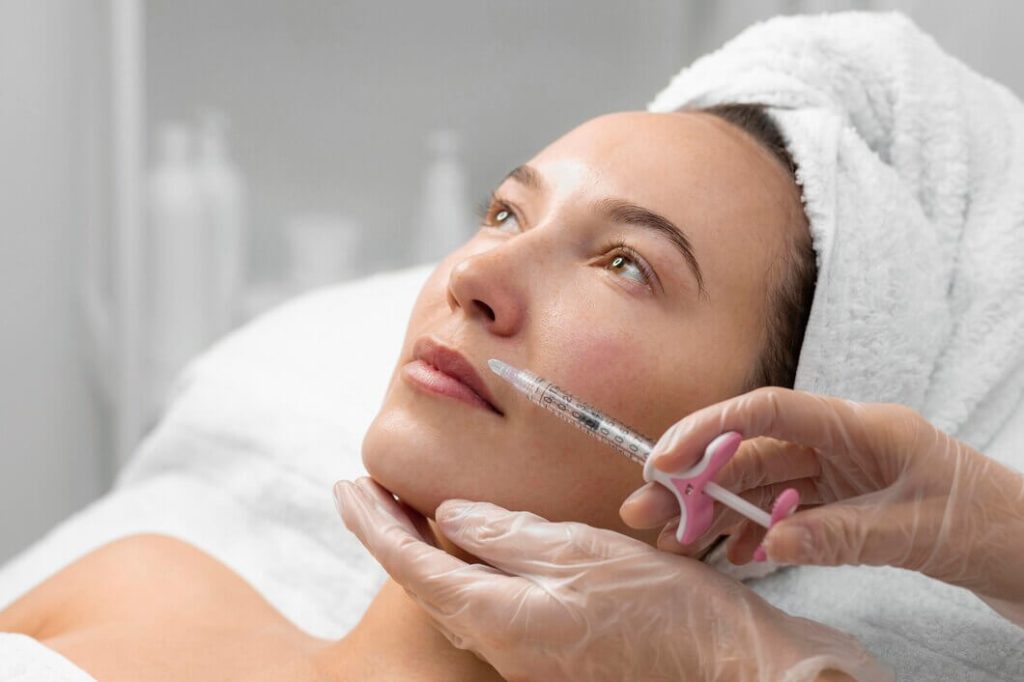
Depth and layering strategies vary dramatically. HA fillers are placed in specific anatomical planes. Superficial fillers sit in the upper dermis. Deep fillers are placed subdermally for structural support. Placement precision determines natural-looking results.
Polynucleotides work best in the mid-dermis, where fibroblasts live. Multiple small depots evenly spread the activation signal. Coverage matters more than exact depth.
Needle versus cannula approaches suit different scenarios. HA fillers often need needles for precise placement. Cannulas work great for fanning product across larger areas. Reduced trauma helps in vascular areas.
Polynucleotides are commonly delivered using needles for multiple small injections in a grid pattern. Some practitioners prefer cannulas around delicate zones like the under-eyes.
Area-specific considerations change technique. Under-eye polynucleotides go very superficial with tiny volumes. HA fillers need careful, deep placement to avoid visibility.
Cheek treatments with HA filler involve deep bolus injections for lift. Polynucleotides spread across the entire area in blanket coverage.
Neck and décolleté rarely get HA filler because the volume can look unnatural. Polynucleotides excel here with systematic coverage.
Safety Considerations and Best Practices
Patient screening catches potential issues early. For HA fillers, ask about previous reactions and blood thinners. Check for active infections. Understand volume expectations to prevent overfilling.
Polynucleotide screening focuses on fish allergies, since most products contain salmon DNA. Review autoimmune conditions. Assess whether the patient can commit to multiple sessions.
Contraindications overlap but differ slightly. Both avoid active infections, pregnancy, and bleeding disorders. HA fillers need extra caution with autoimmune conditions affecting connective tissue.
Sterile technique prevents complications. Clean thoroughly with an antiseptic. Use fresh needles and maintain aseptic handling throughout.
Managing minor complications requires different approaches. HA filler lumps might need massage or hyaluronidase. Polynucleotide bumps usually resolve within 48 hours. Bruising happens with both and fades naturally.
Redness after HA fillers resolves within hours to days. Polynucleotide injection sites may remain tender for 3 to 4 days. Neither usually requires intervention beyond ice.
Glossary
- Hyaluronic Acid (HA) Filler: Gel-like injectable made from hyaluronic acid that physically adds volume under the skin to fill wrinkles, restore fullness, and reshape facial contours.
- Polynucleotides: DNA molecule chains that activate skin cells to produce collagen and elastin, improving tissue quality through biological regeneration rather than adding volume.
- Volumization: The process of restoring lost facial fullness by adding substance beneath the skin, typically through filler injections that physically occupy space.
- Skin Rejuvenation: Improving skin health and appearance by enhancing cellular function, boosting collagen production, and increasing hydration through regenerative treatments.
- Layering Technique: Strategic placement of injectables at different tissue depths to achieve optimal results, whether for structural support with fillers or cellular activation with biostimulators.
References
Dermax Medical. (2025). Polynucleotides or tear trough filler: A practical comparison. Retrieved from https://www.dermaxmed.com
Dream Clinic. (2025). Comparing hyaluronic acid (HA) and polynucleotides (PN). Retrieved from https://www.dreamclinic.my
Health and Aesthetics. (2025). Polynucleotides vs dermal fillers: Understanding the differences. Retrieved from https://www.healthandaesthetics.co.uk
Kim, S., et al. (2020). Comparative evaluation of the effectiveness of novel hyaluronic acid-polynucleotide complex dermal filler. Scientific Reports, 10, 6221. Retrieved from https://www.nature.com/articles/s41598-020-61952-w
London Dermatology Centre. (2025). Are polynucleotide injections the future of aesthetics? Retrieved from https://www.london-dermatology-centre.co.uk
National Center for Biotechnology Information. (2020). Comparison of the effects of polynucleotide and hyaluronic acid fillers on periocular rejuvenation. Retrieved from https://pubmed.ncbi.nlm.nih.gov/32248707/Oblique Beauty. (2025). Polynucleotides vs fillers: What’s the difference? Retrieved from https://obliquebeauty.uk